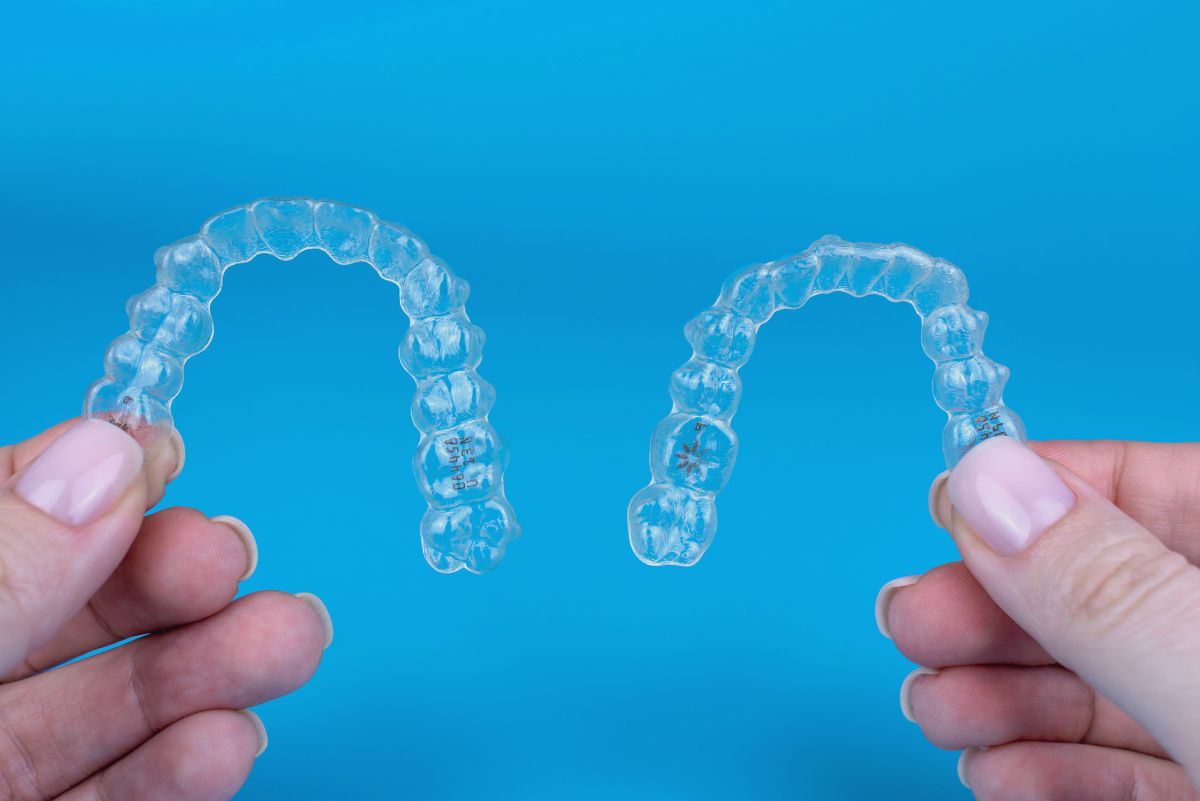
Orthodontic treatment for underbite correction isn’t one-size-fits-all. The right approach depends entirely on the specific mechanics of your jaw and teeth. Invisalign can successfully fix many underbites, particularly those caused by the angle of your teeth rather than the underlying bone structure.
Clear aligners have evolved significantly over the last few decades. Dentists now use them to shift lower teeth back and upper teeth forward. This corrects the reverse overlap characteristic of an underbite.
However, whether you’ll be a good candidate for the treatment depends on a thorough functional diagnosis. The goal is to map out exactly how your jaws and teeth interact so we can find appropriate solutions.
Evaluating Your Candidacy for Clear Aligners
Although underbites are common, affecting 5 to 10% of all people, not every underbite behaves the same way. An underbite occurs when your lower front teeth sit ahead of your upper front teeth. The misalignment creates a unique set of functional challenges, ranging from premature tooth wear to chewing difficulties and jaw joint stress.
To decide if clear aligners will work for you, we need to look past the visible position of your teeth. We evaluate the relationship between your upper and lower jaws. We also examine the health of your temporomandibular joint (TMJ) and the specific angles of your incisors. This is how we determine whether orthodontic treatment for underbite is the right path forward for you.
Mild to Moderate Underbites
If your underbite stems primarily from how your teeth tilt or crowd within the dental arch, you may be a strong candidate for clear aligner therapy. Dentists refer to this as a "dental underbite," in which the underlying jawbone aligns properly but the teeth have erupted at an unfavourable angle.
Invisalign works here because it applies constant, controlled force to tilt those misaligned teeth back into their correct positions. The aligners push the upper teeth forward and the lower teeth backward. The gradual shift eliminates the reverse overlap, establishing a stable, functional bite. The plastic trays wrap around the entire arch, providing a stable anchor point to orchestrate these simultaneous movements.
Severe Skeletal Underbites
A skeletal underbite has a different structure and, therefore, an entirely different situation for Invisalign candidacy. In these cases, the lower jawbone has grown significantly further forward than the upper jawbone. The discrepancy exists in the bone structure, rather than just the position of the teeth.
Clear aligners alone can’t physically shorten or reposition the jawbone. Treating a severe skeletal underbite would likely require surgical intervention to reposition the jaws. This would be paired with traditional braces or aligners to finalize the tooth placement.
Invisalign isn’t usually recommended here as a first-line approach. Attempting to mask a severe skeletal discrepancy by heavily tipping the teeth with aligners often leads to unstable bites, recession and compromised tooth roots.
How We Approach Orthodontic Treatment for Underbite
The process of successfully correcting a bite starts long before you ever wear your first set of aligners. Dr. Graas approaches this through the lens of her Kois Center training. The curriculum focuses heavily on occlusion, which is how your teeth fit and function together, along with comprehensive risk assessment.
We recognize that bite issues rarely exist in isolation. An underbite often contributes to accelerated enamel wear, chipping, and muscle tension in your face and neck. A functional diagnosis maps out exactly how your teeth currently meet. It also considers how they should meet to distribute chewing forces evenly. Teeth meant for biting shouldn’t be carrying the heavy loads meant for chewing.
Dr. Graas uses the information from your functional diagnosis to map out your treatment, step by step. She analyzes the precise sequence of tooth movements required to fix the underbite without creating new interferences.
This thorough evaluation determines the entire treatment plan up front. It gives you a clear picture of the required time and mechanics. She can assess the thickness of your gum tissue, the density of your bone, and the specific wear patterns on your enamel. Then, we can build a treatment plan that supports your total oral health.
The Mechanics of Orthodontic Treatment for an Underbite
Shifting an underbite involves more than just wearing the plastic trays. Complex bite corrections often require auxiliary tools to help the aligners achieve the necessary force and direction.
You would need composite attachments placed on specific teeth. These small, tooth-coloured bumps give the aligners leverage to grip the teeth and apply directional pressure. Acting as microscopic handles, they allow the plastic trays to rotate. They translate teeth in ways that smooth plastic alone just can’t achieve.
Underbite correction almost always requires orthodontic elastics (rubber bands). You attach these elastics to small hooks cut into the alignments or to metal buttons bonded directly to your back teeth. The bands stretch from the lower jaw to the upper jaw, applying continuous tension that pulls the lower arch back and the upper arch forward.
Whether you wear your elastics exactly as prescribed ultimately determines the success of this bite correction. The aligners position the teeth within the bone, while the elastics establish the relationship between the upper and lower arches.
Timeline and Daily Expectations
Correcting functional bite issues takes time. While minor aesthetic alignments might wrap up in six months, structural bite correction generally spans 12 to 24 months. The exact timeline depends on the severity of the initial misalignment and your compliance with wearing the aligners.
You need to wear your aligners for 20 to 22 hours every day, removing them only to eat, drink anything other than plain water, brush, and floss. If you fall short of this daily target, it slows down tooth movement and can prevent the aligners from tracking properly. When the aligners stop tracking, the plastic loses its grip on the attachments, and the teeth stop moving according to the digital plan.
Expect each new set of aligners to feel tight for the first few days. This pressure confirms the trays are actively working. As your teeth adjust to the new position, the pressure subsides until you swap to the next tray in the series. Again, consistency is important, as wearing the aligners diligently keeps the inflammatory process active and allows the bone to continuously remodel around the moving roots.
Maintaining strict oral hygiene is equally important during this period. Because the trays trap saliva against your teeth, they also trap any sugars or food debris left behind after eating. Brushing and flossing after every meal prevents the aligners from becoming an incubator for decay.
Exploring Alternative Orthodontic Options
Clear aligners handle complex tooth movements beautifully, but certain mechanical challenges are better addressed with traditional bracket-and-wire systems. Traditional braces offer maximum control over root angulation and vertical tooth movements.
If a tooth needs to be pulled down from the gums or rotated severely, the fixed grip of a metal or ceramic bracket provides superior leverage. Dr. Graas evaluates the mechanical demands of your specific bite and will recommend traditional braces if they offer a more predictable, stable result for your dental anatomy.
We prioritize long-term stability and joint health over any single treatment modality. The goal is always a functional, comfortable bite that protects your teeth from premature wear and joint strain.
Retaining Your New Bite
As you complete your orthodontic treatment for underbite, you enter the “retention” phase. Without retainers, your teeth will naturally attempt to drift back into their original underbite positions. The bone and ligaments supporting your teeth need time to solidify around the new root placements.
You’ll wear clear retainers full-time for a prescribed period immediately following your treatment. Eventually, you'll taper down to just nighttime wear. Depending on your specific case, Dr. Graas may also recommend a bonded wire retainer placed behind your front teeth to provide permanent support.
If you’d like to explore whether clear aligners are right for your bite, request a consultation with Dr. Jennifer Graas by calling 403-263-6340 or filling out this contact form.