Many adults start researching alternatives to braces because they want to improve their smile without committing to metal brackets and wires. For professionals who spend much of the day in meetings, presentations, or client-facing roles, traditional braces can feel too visible, too inconvenient, or simply out of step with their lifestyle.
Straightening or improving your smile no longer depends on traditional braces alone. In many cases, Invisalign, composite bonding, porcelain veneers, or a combination of treatments can create meaningful changes with a more discreet approach.
Why Adults Often Hesitate to Get Braces
Adult orthodontic treatment usually comes with different concerns than teen treatment. Appearance plays a role, but lifestyle often matters just as much.
Many adults worry about:
- speaking clearly at work
- maintaining a polished appearance
- managing food restrictions
- attending frequent adjustment appointments
- committing to treatment for multiple years
Some people also don’t need major orthodontic correction. They may only want to address mild crowding, spacing, worn edges, or uneven teeth that affect the overall appearance of their smile.
That opens the door to several alternatives that feel more flexible and less noticeable than traditional braces for adults.
Invisalign: The Most Common Alternative to Braces for Adults
For adults who need orthodontic treatment but want a more discreet option, Invisalign is usually the closest alternative to traditional braces.
Invisalign uses a series of clear aligners that gradually move teeth into new positions. The aligners fit closely against the teeth, making them far less noticeable than metal braces. Most adults also appreciate being able to remove them while eating, brushing, flossing, or attending professional events.
Invisalign treatment often appeals to our adult patients who want orthodontic treatment that fits into a busy schedule without dramatically changing their appearance. Mild to moderate crowding, spacing, and bite concerns can often be treated successfully with clear aligners.
Some of our patients also combine Invisalign with cosmetic treatments afterward to refine the final result. Small adjustments in tooth shape, colour, or symmetry can sometimes make an already improved smile feel more complete.
Composite Bonding for Minor Cosmetic Concerns
Not every adult who dislikes their smile needs orthodontic treatment.
Composite bonding can instantly improve the appearance of:
- slightly uneven teeth
- small gaps
- chipped or worn edges (if not caused by a bite problem)
- minor shape irregularities
- subtle asymmetry
- colour
Bonding uses tooth-coloured composite resin to reshape specific areas of the teeth. Treatment usually requires little to no removal of natural enamel.
Composite bonding does not physically move teeth the way braces or Invisalign do. Instead, it changes how the teeth look. For adults with mild cosmetic concerns, that distinction can make bonding an appealing option.
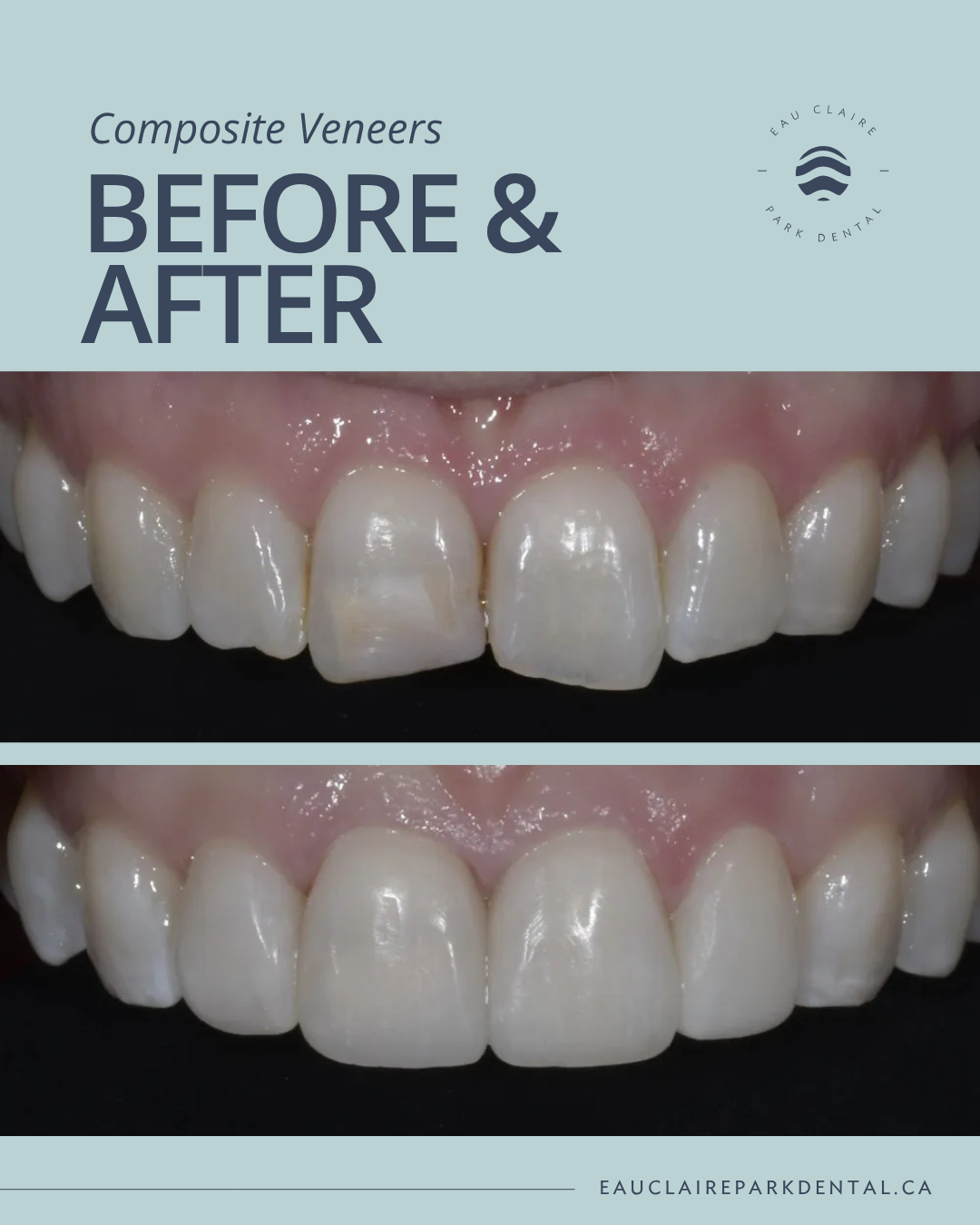
Dr. Graas did 4 composite veneers for this patient who had worn her teeth down prior to orthodontic treatment. No tooth structure removal was required.
In some cases, bonding works best after Invisalign since orthodontic treatment creates better spacing and bite alignment first.
Porcelain Veneers for Comprehensive Cosmetic Changes
Porcelain veneers offer another alternative for adults who want to improve the appearance of their smile without traditional braces.
Veneers can improve:
- tooth shape
- spacing
- colour
- proportion
- mild visual crowding
Porcelain veneers work particularly well for adults whose concerns involve both alignment and cosmetic wear. For example, someone with slightly crooked teeth and chipped enamel may benefit more from a combined cosmetic approach than orthodontics alone.
Veneers are not a substitute for orthodontics in every case. Teeth that overlap heavily or those with significant bite concerns usually require tooth movement before cosmetic treatment begins.
Sometimes the Best Option Is a Combination Approach
Adults often assume they must choose between braces or cosmetic dentistry. In reality, many treatment plans combine both.
A patient might complete several months of Invisalign to improve alignment, then use composite bonding or veneers to refine shape and symmetry afterward. This approach can create a more balanced result while keeping orthodontic treatment shorter and more targeted.
For adults who feel resistant to traditional braces, combination treatment can feel far more approachable than committing to years of brackets and wires.
You can also browse our Smile Gallery to see examples of combined cosmetic and orthodontic treatment outcomes.
In this video, Dr. Graas shows some cases where the patient had orthodontic treatment prior to doing veneers, which allowed the treatment to be a lot more conservative with minimal tooth structure removal.
Choosing the Right Alternatives to Braces for Adults
The best option depends on what you want to change. Some people need orthodontic movement to improve bite function or significant crowding. Others feel more focused on subtle cosmetic improvements that help their smile look more balanced and polished.
In many cases, treatment doesn’t have to fall into a single category. Invisalign, composite bonding, and porcelain veneers can work together to improve alignment, shape, and symmetry in a way that feels natural, not overdone.
A consultation with Dr. Jennifer Graas helps clarify which approach makes sense for your smile, your timeline, and your priorities. She can walk you through those options and help you decide on a treatment type.