A common conversation we have with our patients is about tooth sensitivity. Many people are surprised to learn that their daily coffee habits, sparkling water, sports drinks, or energy drinks may be contributing to the problem.
Most people know sugary drinks aren’t great for their teeth. Fewer people realize that enamel erosion often starts with the acid in what they drink, even if that beverage contains little or no sugar. The issue isn’t always how much sugar a drink contains. It’s how often your teeth are exposed to acid and how long that acid stays on the enamel.
What Is Enamel Erosion?
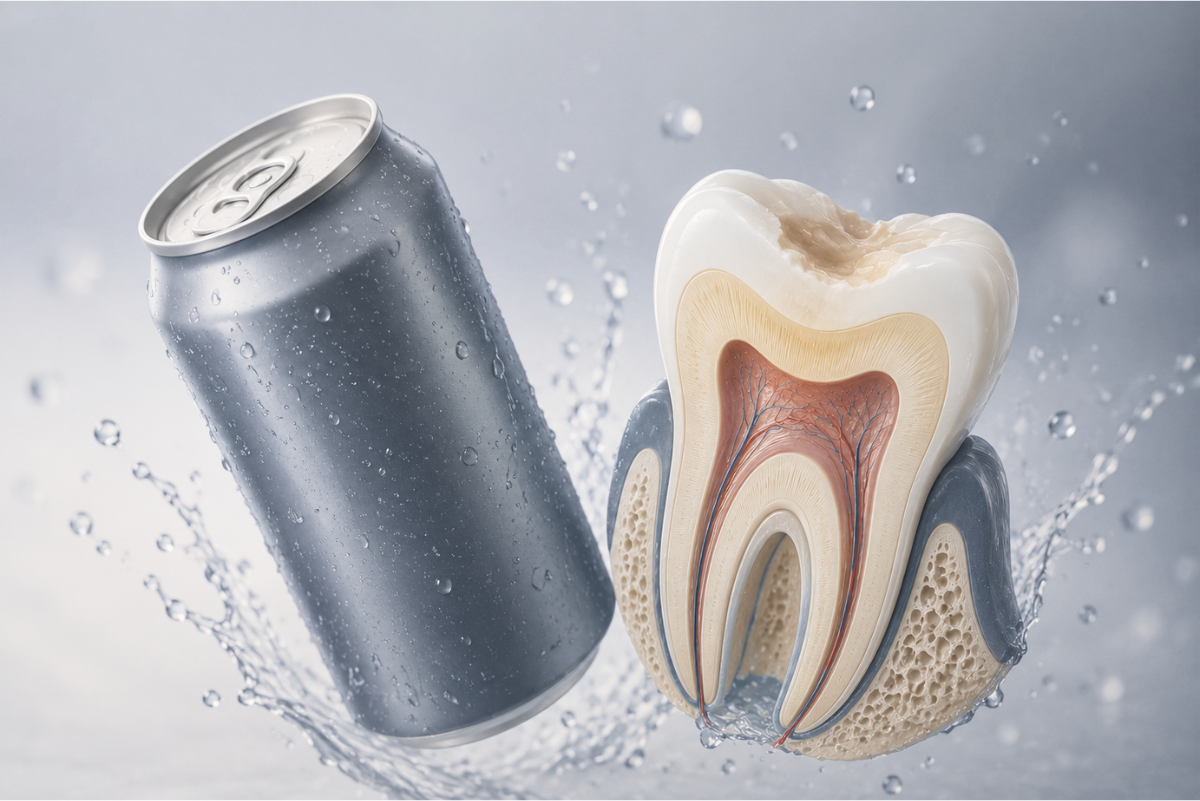
Your tooth enamel is the hard outer layer that protects the softer inner structures of your teeth. Although enamel is the strongest substance in the human body, it can't repair itself once it's lost.
When your mouth is exposed to acids, minerals gradually dissolve from the enamel. Over time, repeated acid exposure can thin this protective layer, leaving teeth more vulnerable to sensitivity, staining, cavities, and wear.
Some of the earliest signs of enamel erosion include:
- Increased sensitivity to hot, cold, or sweet foods and drinks
- Teeth that appear more yellow as the underlying dentin becomes visible
- Worn edges on teeth, making them appear more translucent
- Small potholes or grooves on the chewing surfaces
- A rough or dull appearance to the enamel
The earlier we identify enamel loss, the more options we have to slow its progression and protect your teeth. This is one reason why we take a 3D scan of our patients’ teeth on a yearly basis — there is no better technology to assess for enamel wear and erosion over time.
How Acidic Drinks Affect Your Teeth
When people think about acidic drinks and teeth, they often picture soft drinks. While regular pop is certainly acidic, it's not the only beverage that can contribute to enamel erosion. Diet soft drinks, sports drinks, energy drinks, citrus juices, lemon water, kombucha, wine, and flavoured sparkling waters can all contribute.
Every time you take a sip, the pH in your mouth changes. After your last sip, it takes saliva roughly 90 minutes to fully buffer the pH in your mouth back to a neutral, healthy level. If you're reaching for another acidic drink or snack before that window closes, your teeth never get the recovery time they need. Over time, that repeated cycle of acid exposure without adequate buffering is what drives sensitivity, demineralization and eventually — cavities.
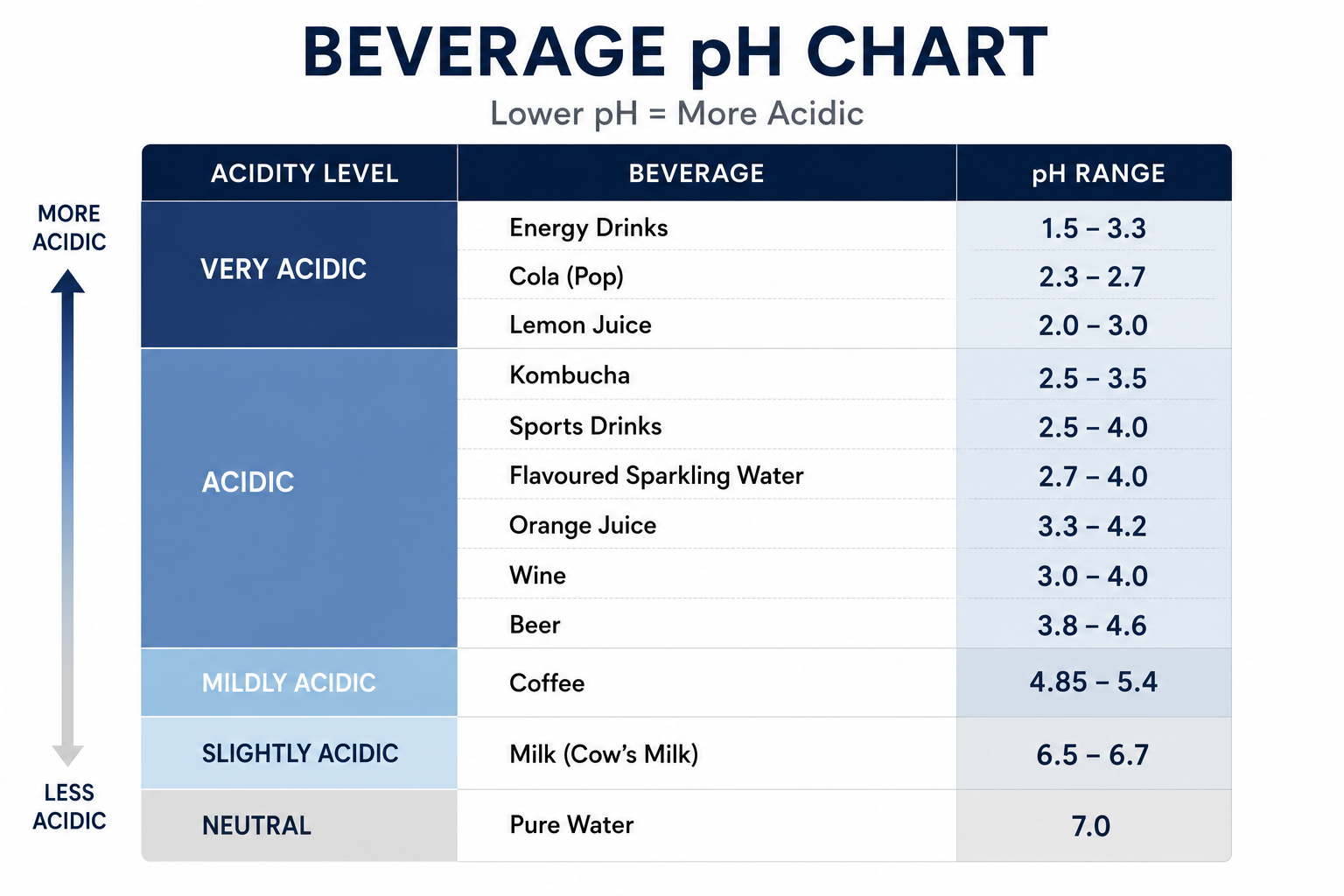
The lower the pH, the more acidic the drink. Frequent or prolonged exposure to beverages below pH 5.5 increases the risk of enamel erosion and tooth sensitivity. Values are approximate and may vary by brand.
Why Energy Drinks Are Especially Hard on Teeth
Energy drinks combine high acidity with significant amounts of sugar. Even sugar-free versions often remain highly acidic because of ingredients added for flavour and preservation.
That combination increases the risk of enamel erosion, tooth sensitivity, and cavities. It can also cause your existing dental work to wear down faster.
People often sip energy drinks throughout the morning or afternoon for a steady caffeine boost. That habit repeatedly exposes enamel to acid before saliva has a chance to restore the mouth's natural balance.
If you regularly drink energy drinks and have noticed increasing tooth sensitivity, enamel erosion may be a contributing factor.
How Snack Choices Affect Your Teeth
Your drink isn't the only thing affecting your enamel between dental cleanings. Snack choices also influence how long acids and sugars remain in contact with your teeth.
One point Dr. Jennifer Graas discusses with her patients is that oral bacteria do not distinguish between sources of sugar. Whether it comes from candy, a sports drink, juice, or a sweet coffee beverage, bacteria simply use it as fuel. A sticky caramel chocolate can cling to the grooves of your teeth for quite some time, while ice cream, though it also contains sugar, typically clears the mouth much more quickly. Think about how long a snack will remain on your teeth, not just how much sugar it contains.
Dr. Graas shares more practical tips in her educational video on making smarter snack choices. Watch it below.
Small Habits Can Make a Big Difference
Protecting your enamel doesn't mean eliminating every favourite drink. A few simple changes can significantly reduce acid exposure over time.
Consider these habits, all of which are often easier to maintain than completely giving up the foods and drinks you enjoy:
- Drink acidic beverages with meals instead of sipping them throughout the day.
- Use a straw when appropriate to reduce direct contact with your teeth.
- Finish your drink in one sitting rather than carrying it around for hours.
- Rinse your mouth with plain water afterwards to help neutralize residual acid.
- Stay well hydrated throughout the day to support healthy saliva production.
- If you’ve just had something acidic, wait about 30 minutes before brushing. Brushing immediately (particularly if you’re using an abrasive toothpaste) can remove enamel that has temporarily softened from the acid.
Regular Dental Cleanings Help Catch Enamel Erosion
Because enamel loss happens gradually, many people don't notice a problem until sensitivity develops.
Every routine examination is an opportunity to look beyond cavities. Dr. Graas monitors enamel at every visit through 3D scans of your teeth, identifies early signs of wear, and recommends ways to prevent enamel loss and keep your teeth healthy for the long term.
Experiencing new sensitivity? There may be an underlying cause that can be identified and managed with the right preventive care.
If you've noticed increased sensitivity or you're concerned about how acidic drinks may be affecting your teeth, request an appointment at Eau Claire Park Dental.