Gum contouring can change your smile’s proportions by reshaping excess gum tissue and revealing more of your natural teeth. The procedure is safe and minimally invasive, helping keep you comfortable throughout the process. If your healthy teeth look shorter than you’d like or your gum line draws more attention than the teeth themselves, even a subtle adjustment can create a noticeable difference.
Laser gum reshaping allows your dentist to make those adjustments with precision. But first, it’s important to understand why your smile shows more gum in the first place.
What Causes a Gummy Smile?
Several factors can affect how much gum tissue shows when you smile.
Some people have more gum tissue covering the visible surface of otherwise healthy teeth. Gum overgrowth can also occur with inflammation, certain medications or orthodontic treatment. In other cases, tooth position, lip movement, or the relationship between the teeth, gums and underlying bone can influence how much gum shows.
Once we know what’s causing your gummy smile, we can determine the best treatment. If extra gum tissue is making your teeth look short or uneven, laser gum contouring may be a good option. If tooth position, bone structure or another anatomical factor is contributing, reshaping the gums alone may not create the result you’re looking for.
If you’re looking for cosmetic dental treatment in Calgary, Dr. Jennifer Graas can assess your teeth, gum levels and overall smile to recommend an approach that fits your natural smile.
How Does Laser Gum Contouring Work?
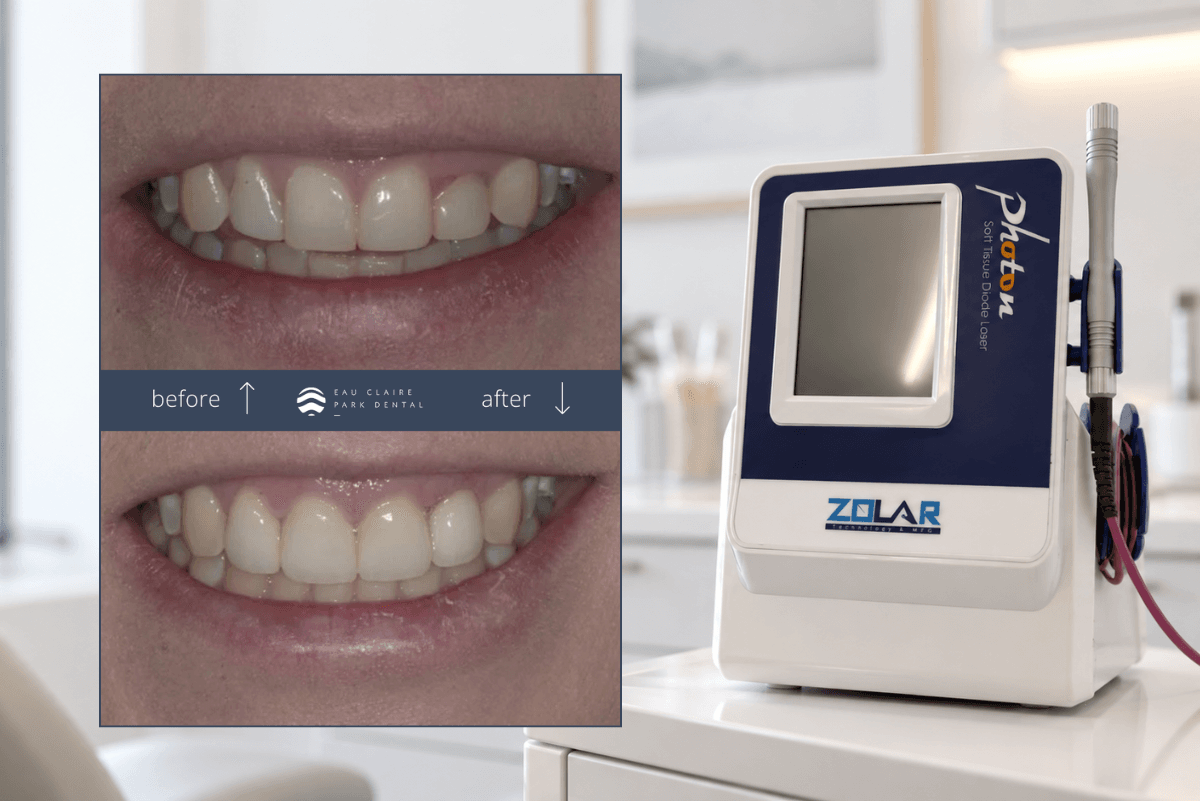
During the procedure, your dentist uses a gentle dental laser to remove and reshape selected areas of gum tissue. Rather than exposing as much tooth as possible, your dentist carefully adjusts the gum line to complement your natural tooth proportions and create a more balanced, symmetrical smile.
The laser works with precision and seals tissue as it goes, which can help reduce bleeding during treatment. In some cases, laser gingivectomy can also reduce or eliminate the need for stitches.
Before reshaping the gums, Dr. Graas assesses how much tooth structure is visible, where the gum line sits on each tooth, and how those proportions work across your smile. Local anesthetic keeps the area comfortable throughout the treatment.
The amount of contouring depends on your starting point. You may only need a small adjustment to correct one uneven area, or Dr. Graas may reshape the area around several teeth to create a more consistent gum line.
How Gum Reshaping Differs From Crown Lengthening
These procedures are sometimes grouped, but they’re not quite the same. Gum contouring, or gingivoplasty, reshapes the gum line. A gingivectomy removes excess gum tissue, while crown lengthening may also involve reshaping the bone beneath the gums.
If there is excess gum tissue above the bone, reshaping it may be all that’s needed. If the bone sits too close to the planned gum line, your dentist may recommend a different approach. Usually this would involve a referral to a periodontist as the procedure would require reshaping bone as well as the gums.
During your cosmetic dental consultation at Eau Claire Park Dental, we will talk about which option fits your anatomy and the change you’re hoping to make.
How Gum Reshaping Differs From Crown Lengthening
These procedures are sometimes grouped, but they’re not quite the same. Gum contouring, or gingivoplasty, reshapes the gum line. A gingivectomy removes excess gum tissue, while crown lengthening may also involve reshaping the bone beneath the gums.
If there is excess gum tissue above the bone, reshaping it may be all that’s needed. If the bone sits too close to the planned gum line, your dentist may recommend a different approach. Usually this would involve a referral to a periodontist as the procedure would require reshaping bone as well as the gums.
During your cosmetic dental consultation at Eau Claire Park Dental, we will talk about which option fits your anatomy and the change you’re hoping to make.
What Does Recovery Look Like?
Recovery can vary depending on how much gum tissue is treated and the type of procedure you have. You may notice some tenderness, mild swelling or temporary tooth sensitivity afterward. Patients undergoing gingivectomy often return to work or school within a day or two, while the gums typically take about a week to heal.
Dr. Jennifer Graas will give you aftercare instructions based on your treatment. We recommend sticking with softer foods for a short time and cleaning the area gently while your gums heal.
Your gum line may also look a little different during the first few days of recovery. As the tissue settles and heals, the final shape and proportions will appear.
Gum Contouring Before and After: What to Expect
One of the biggest changes after cosmetic gum contouring is your smile's proportions. By removing excess tissue, more of the natural tooth becomes visible, which can make teeth that once looked short appear longer and more balanced.
How much of a difference you’ll see depends on your anatomy and natural smile. Dr. Jennifer Graas considers your tooth shape, gum line and facial features when planning treatment so the result looks natural and suits your smile.
Eau Claire Park Dental’s Smile Gallery includes real examples of gum reshaping.
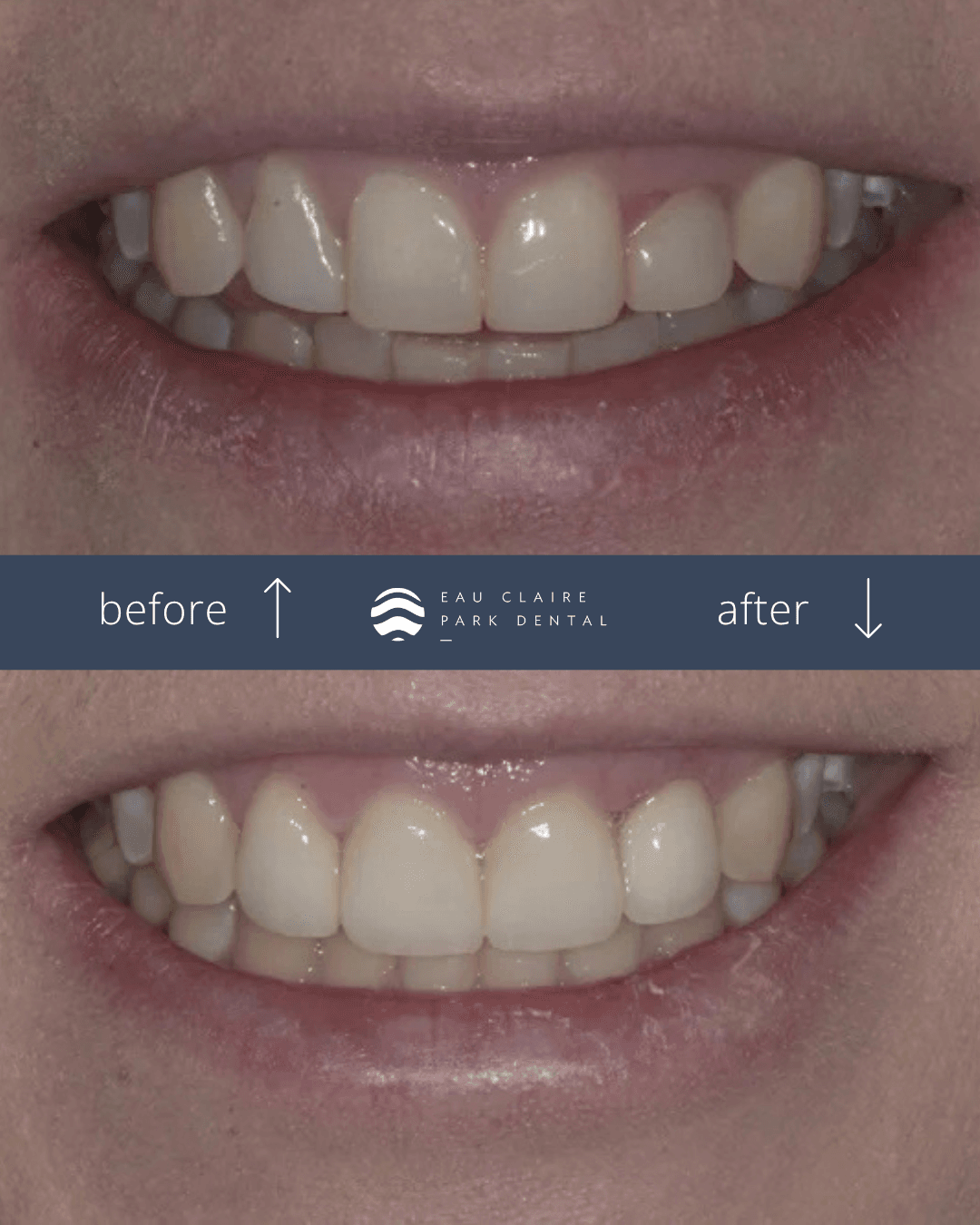
Dr. Graas combined four porcelain veneers with a gum lift to improve smile symmetry.
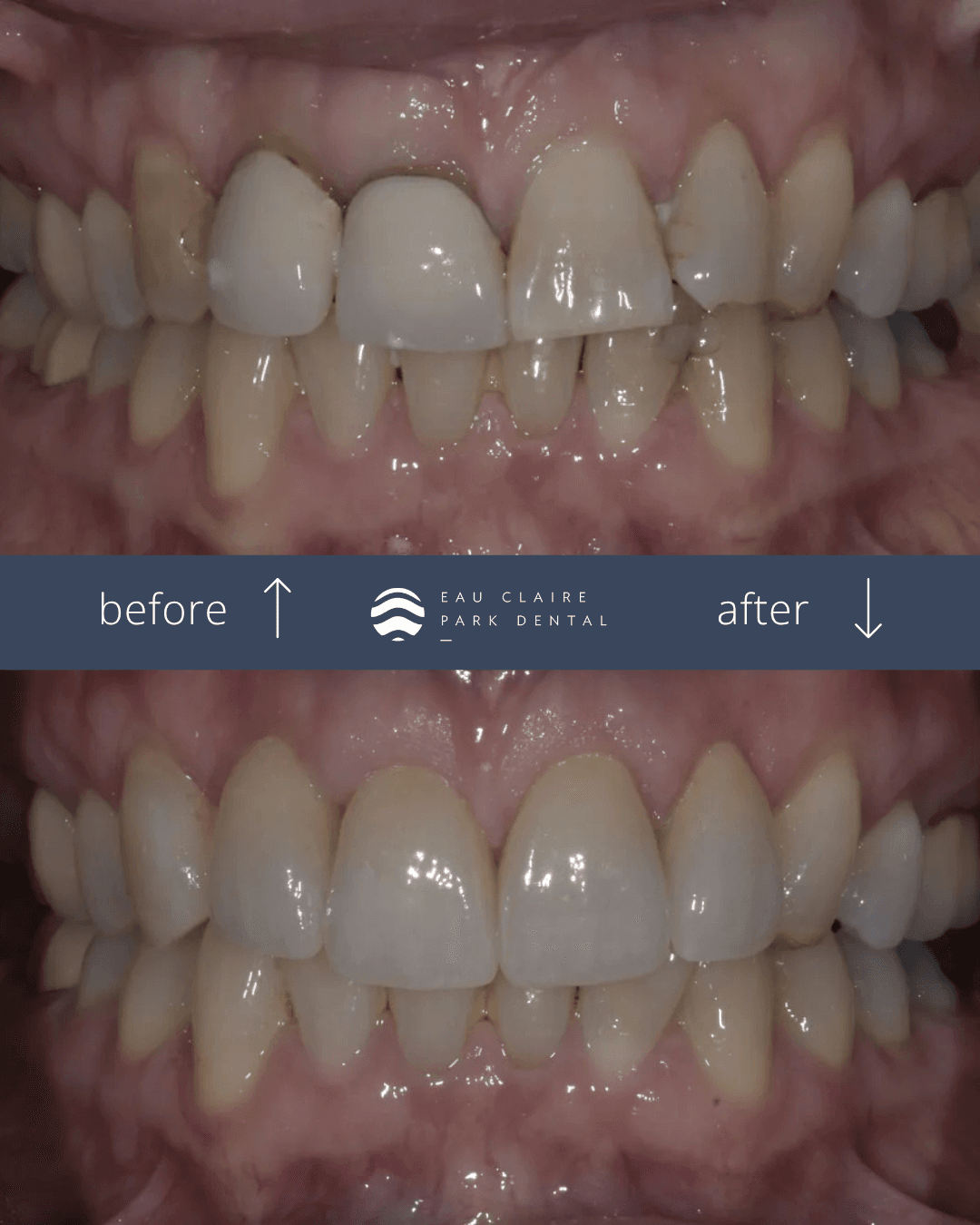
In this case, Dr. Graas paired new crowns with gum recontouring.
Gum contouring can work on its own or as part of a broader cosmetic treatment plan, though individual results will vary.
How Gum Reshaping Fits Into a Broader Cosmetic Treatment Plan
The same assessment that guides gum reshaping on its own also guides how it fits alongside other cosmetic work. Dr. Jennifer Graas plans treatment by looking at tooth shape, gum line and facial features together, not as separate decisions about the gums vs. the teeth.
That's part of why gum reshaping so often appears alongside other cosmetic treatments in a smile makeover. It addresses one part of the same overall picture she's already evaluating, whether or not it's the only change a patient needs.
For patients who want more than a gum adjustment, that whole-smile view keeps the result cohesive, rather than a set of separate fixes.
Is Gum Contouring Right for Your Smile?
Healthy gums and the right anatomy both play a role in whether laser gum contouring is a good option for each patient. If your gums look puffy or enlarged because of inflammation or another oral health concern, Dr. Graas will address that first, before considering cosmetic gum reshaping.
For the right person, gum contouring can make a subtle change that improves tooth proportions and creates a more even gum line. How much can be adjusted depends on your gum tissue, tooth position and the result you’re hoping to achieve.
If you’re considering gum contouring in Calgary, request a consultation at Eau Claire Park Dental.
During your consultation, Dr. Graas will examine your teeth and gums, discuss your smile goals, and explain the available treatment options. You’ll have the chance to ask questions and learn what to expect, so you can decide together on an approach that suits your needs.