When you look at cosmetic dentist before and after photos, the final smile gets most of the attention. What the photos don’t show is the planning that made the result possible. In this case, the most important decision came well before any veneers were placed. Dr. Jennifer Graas looked for why this patient’s front teeth kept wearing down and treated that first.
What He Wanted to Change
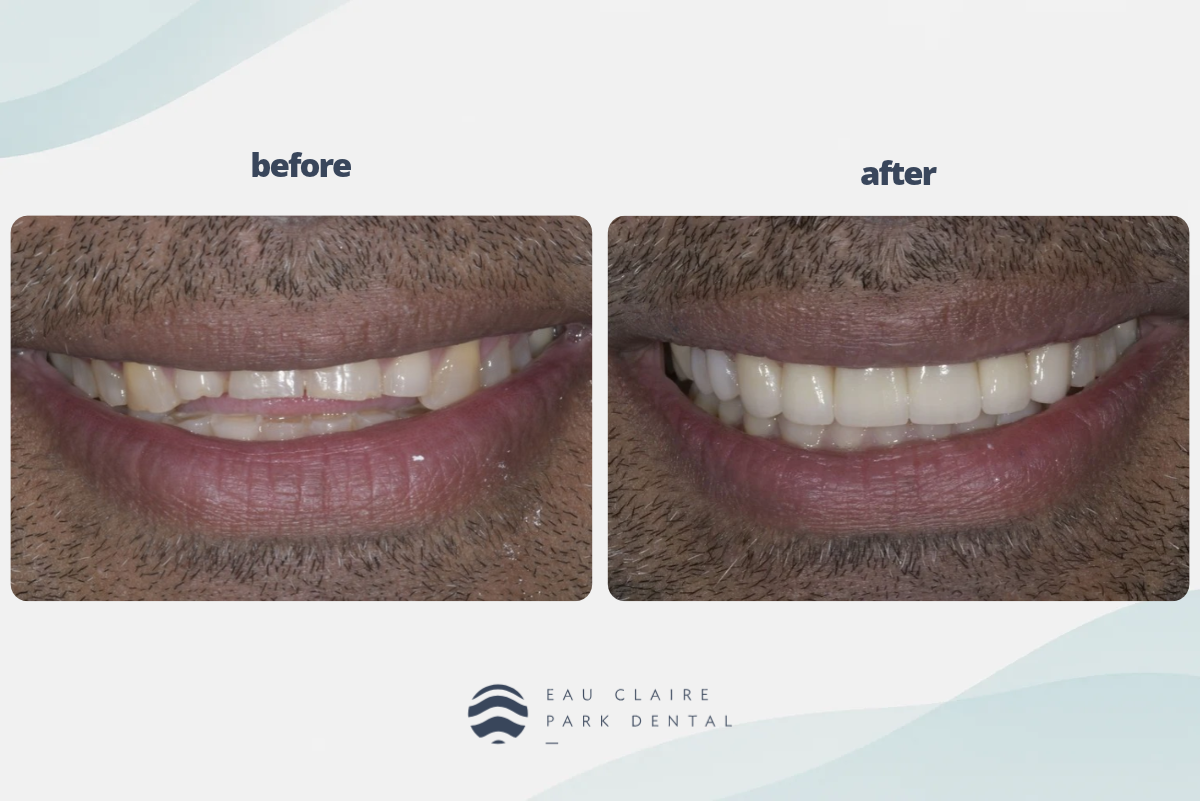
The patient came to us because he didn’t like the worn-down appearance of his front teeth and the continuous chipping along their edges.
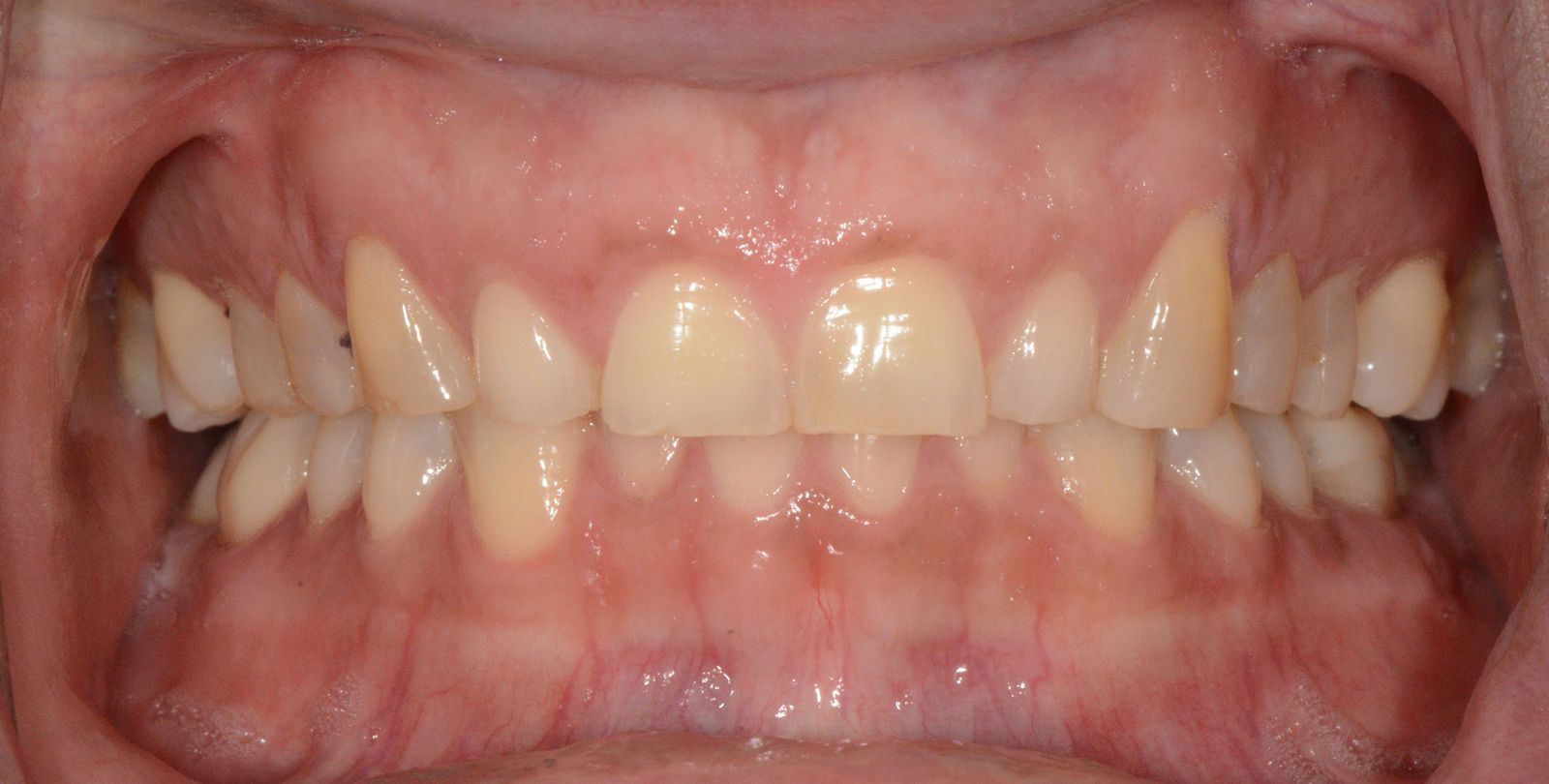
Before treatment: worn, chipped front teeth that showed when he smiled.
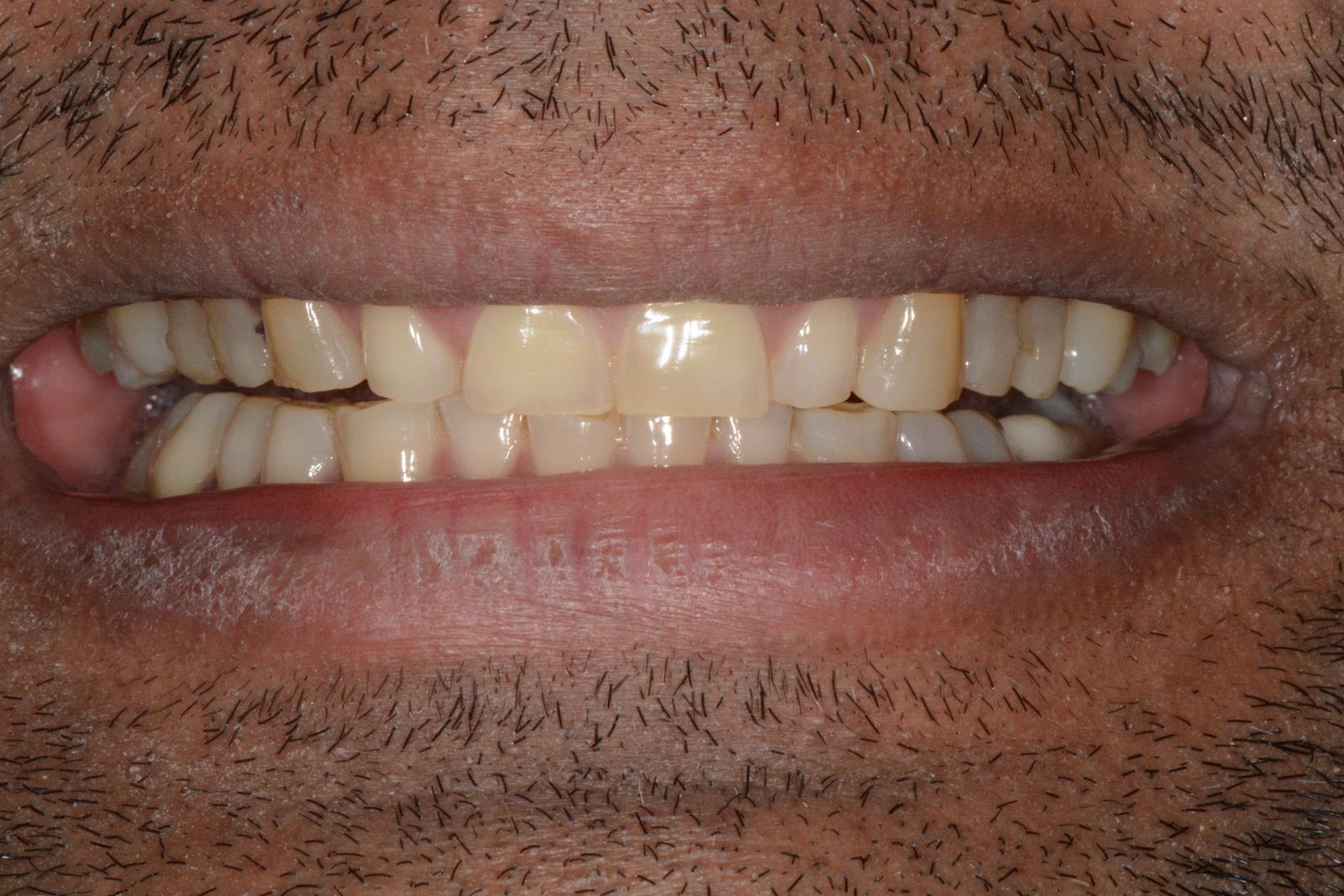
Patient's smile before treatment, showing short, worn front teeth.
Finding the Cause: His Bite
Before recommending any cosmetic treatment, Dr. Graas first assessed the reason for the wear and chipping. The answer was his bite. Because of the way his teeth fit together, he was wearing down his front teeth excessively due to increased friction on these teeth.
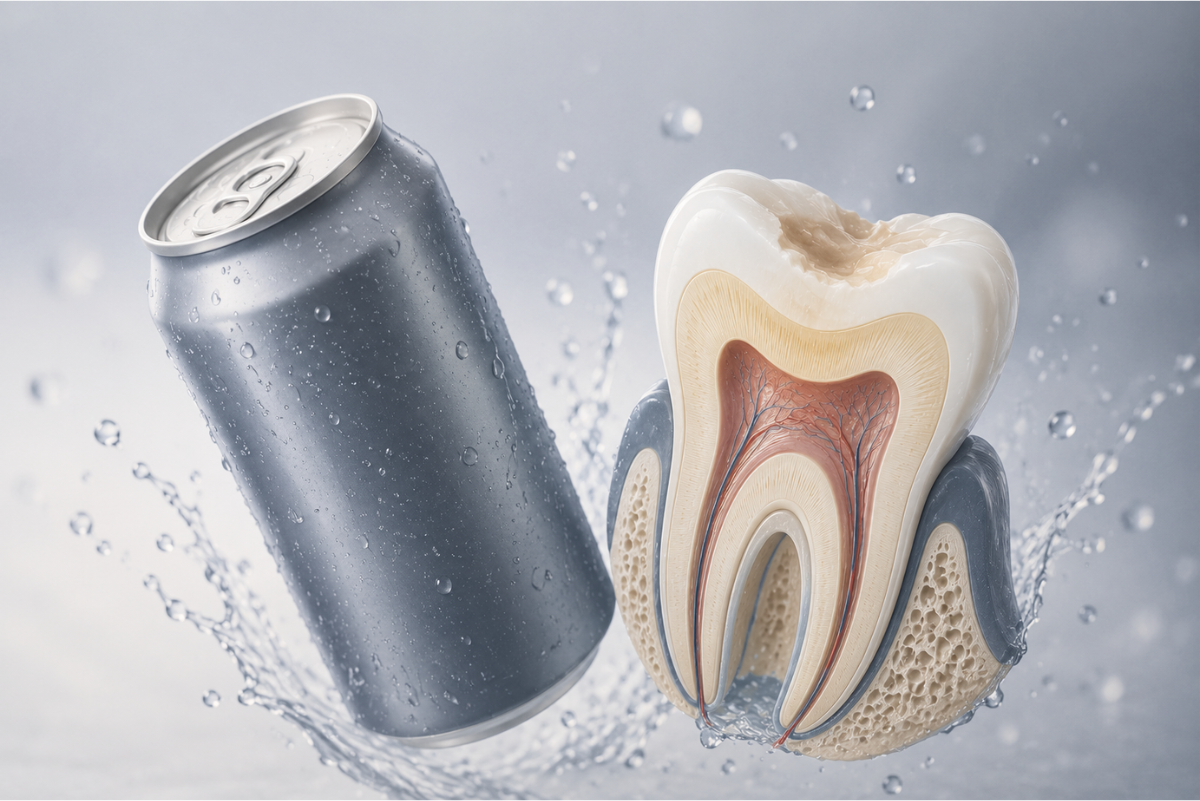
Over time, he had worn completely through the enamel, exposing the second layer of tooth, the dentin. Dentin is six times softer than enamel, so once it's exposed, the wear accelerates. Restoring the teeth without correcting the bite would have meant placing new material under the same pressure that damaged his natural teeth.
In a balanced bite, the back teeth handle most of the force of chewing, and the front teeth guide the jaw smoothly as it moves. When teeth don't come together evenly, the front teeth can end up absorbing pressure and friction they aren't built to handle. That's why Dr. Graas assesses bite alignment, jaw movement and wear patterns at the start of every smile makeover.
Why Orthodontics Came First
Orthodontics was needed to fix the source of the problem, which was his bite. If he had gone straight to veneers, the increased pressure on his front teeth would have stayed the same and the new veneers would break. Making room for porcelain without moving the teeth would also have meant removing more tooth structure, which would further compromise the strength of these teeth.
Instead, Dr. Graas referred him to an orthodontist. Over about 18 months in clear braces, his teeth were moved back to where they used to be. This corrected the bite and left space for porcelain and composite restorative material. Planning orthodontics first allowed more of his natural tooth structure to be saved.
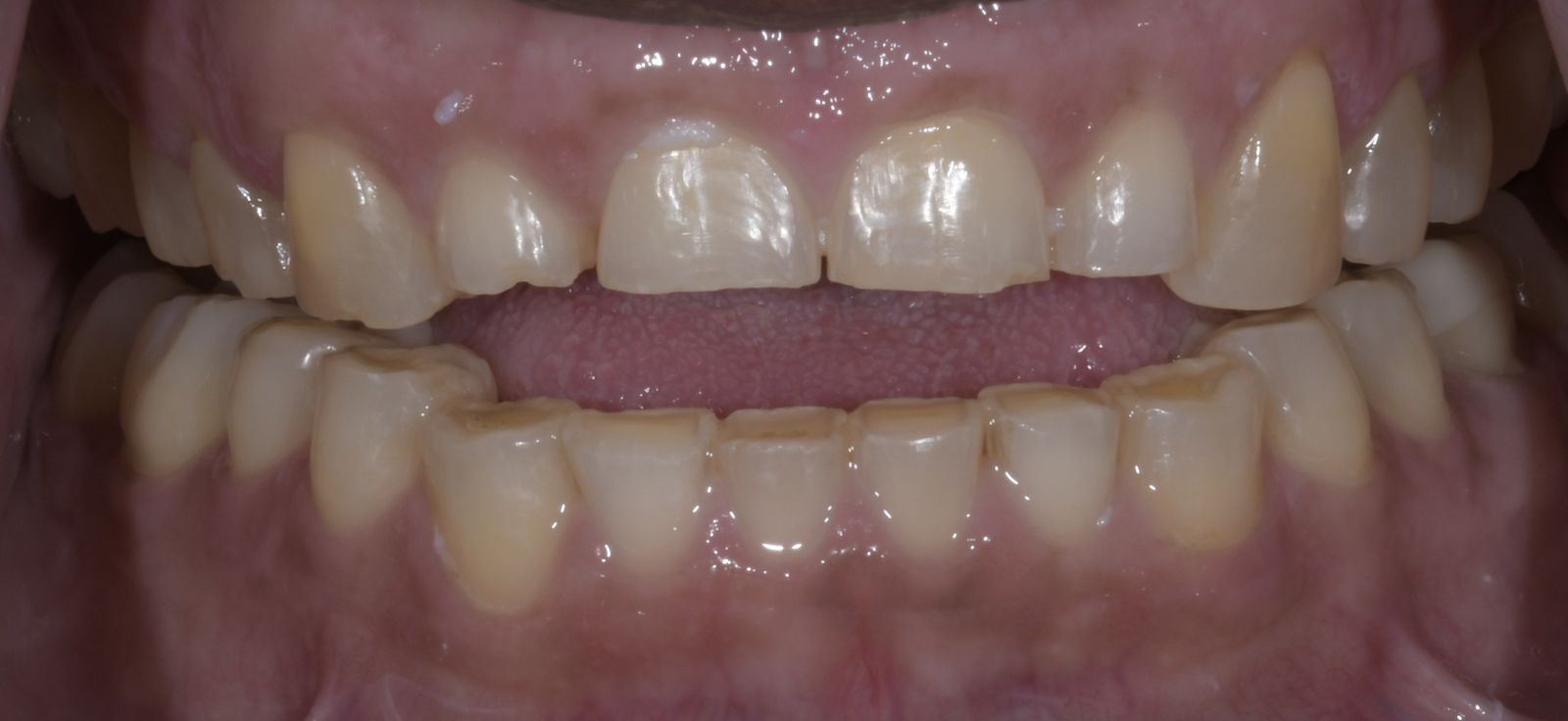
Teeth after orthodontic treatment, with space created for veneers and composite bonding.
Because the plan for his veneers and bonding was in place from the start, the orthodontic phase had a clear goal: to return the teeth to their original position and leave room for restorative material. Each phase set up the next, so his bite and the appearance of his teeth were treated as one plan rather than two.
Restoring His Front Teeth
Once orthodontic treatment was complete, the restorative phase took three appointments over about four weeks. Dr. Graas placed six porcelain veneers on his upper front teeth. On his six lower front teeth, she used composite bonding to cover and protect the worn edges.
Each material had a specific job. Porcelain offers excellent durability and lifelike light reflection, which suits the upper front teeth that show most when he smiles. Composite bonding is a different technique where material is built up on the tooth with little or no enamel removal, which made it a conservative way to rebuild and shield the worn lower edges.
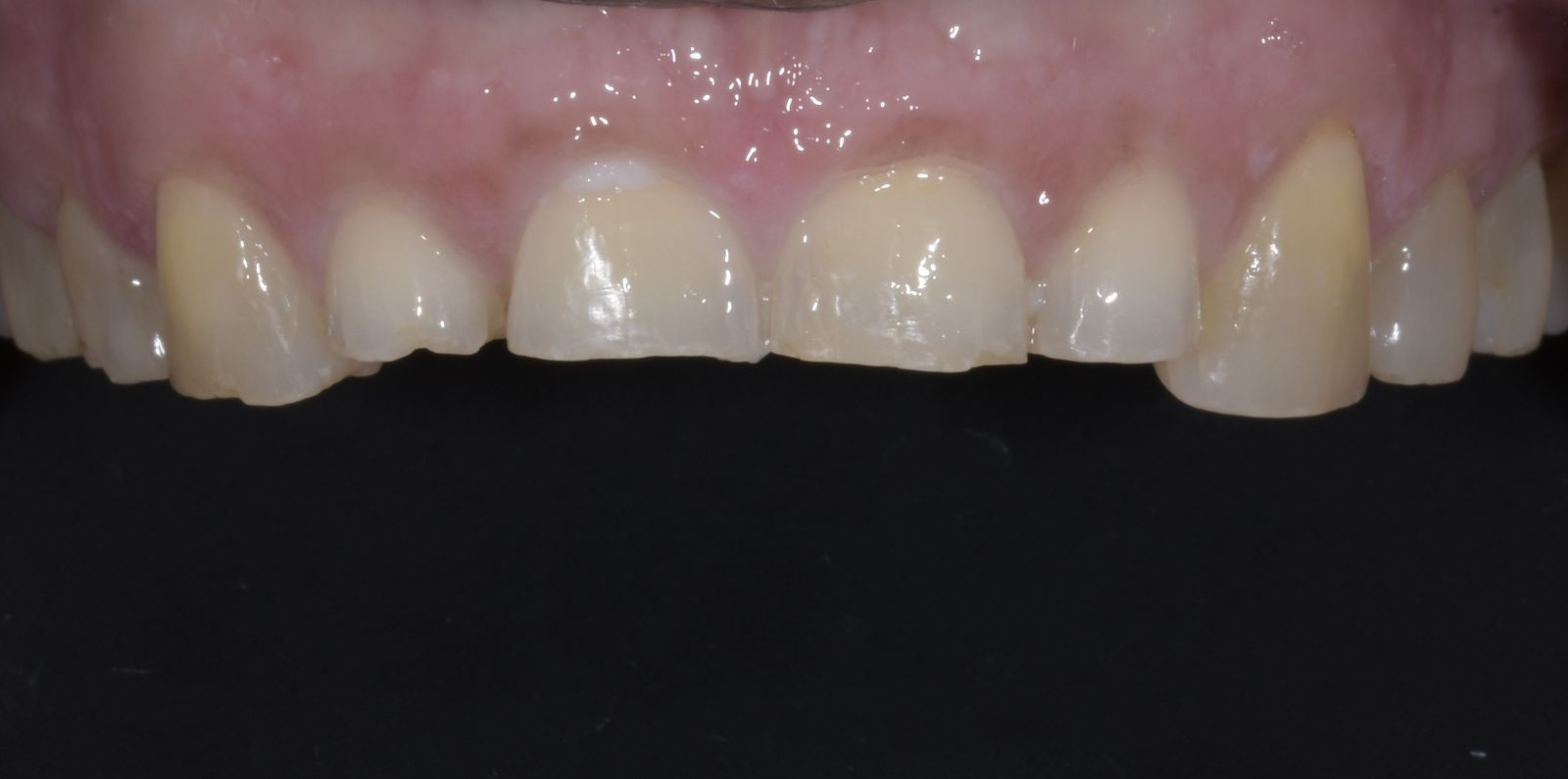
Close-up of chipped, worn upper front teeth before porcelain veneers.
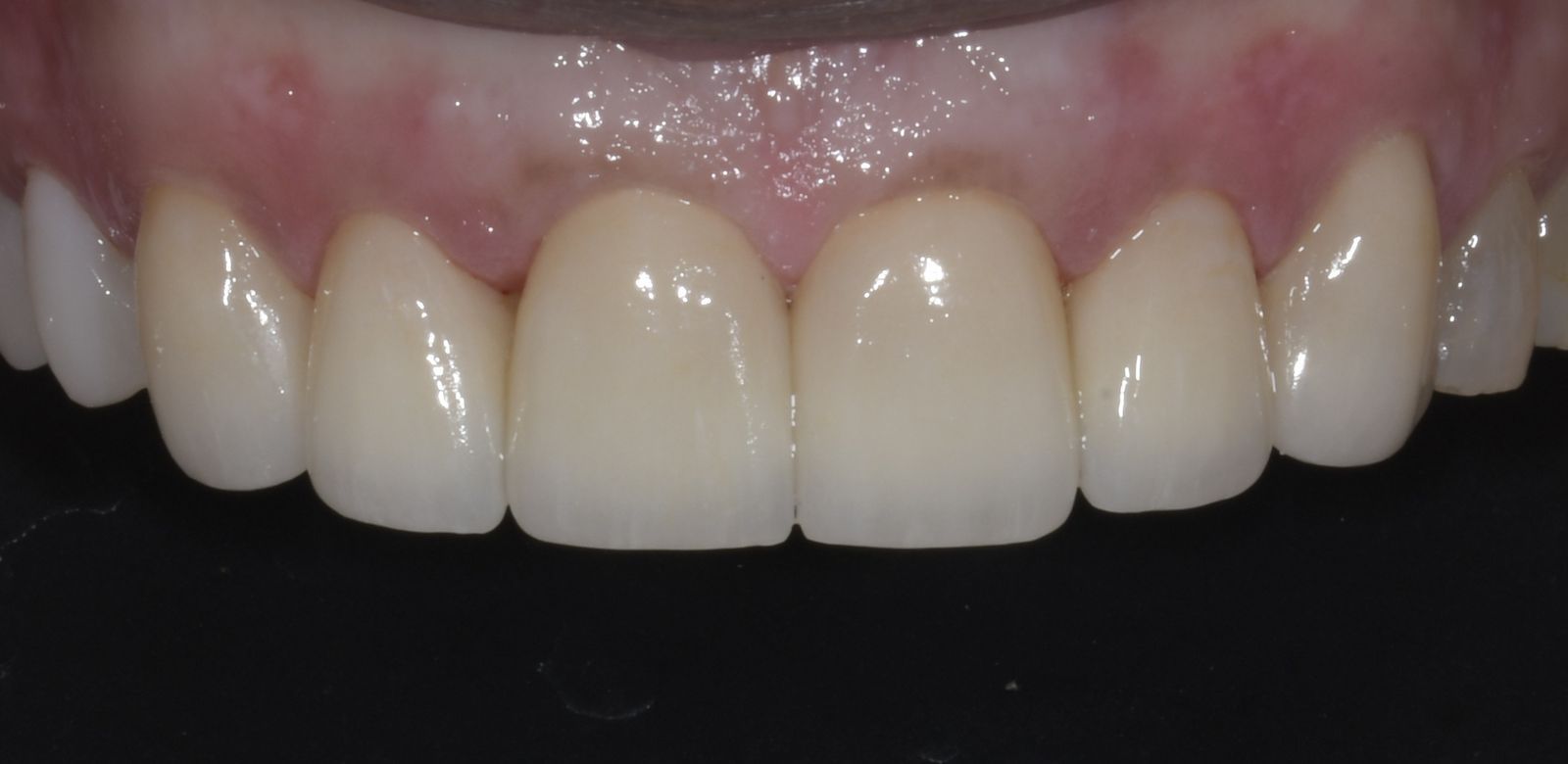
Close-up of six porcelain veneers on the upper front teeth.
The full transformation took approximately 18 months, most of that time in orthodontic treatment.
Dr. Graas designs veneers around each patient's facial structure rather than a standard template. That means choosing a shade that suits the patient's facial features and surrounding teeth, shaping each tooth in proportion to the lips and smile line, and using layered porcelain that emulates the translucency of natural enamel at the edges.
The Result
The patient was very happy with the final result, not only with how his smile looks but with the improvement in his bite and chewing function. Because the bite was corrected first, his new veneers aren't working against the same forces that wore down his natural teeth.
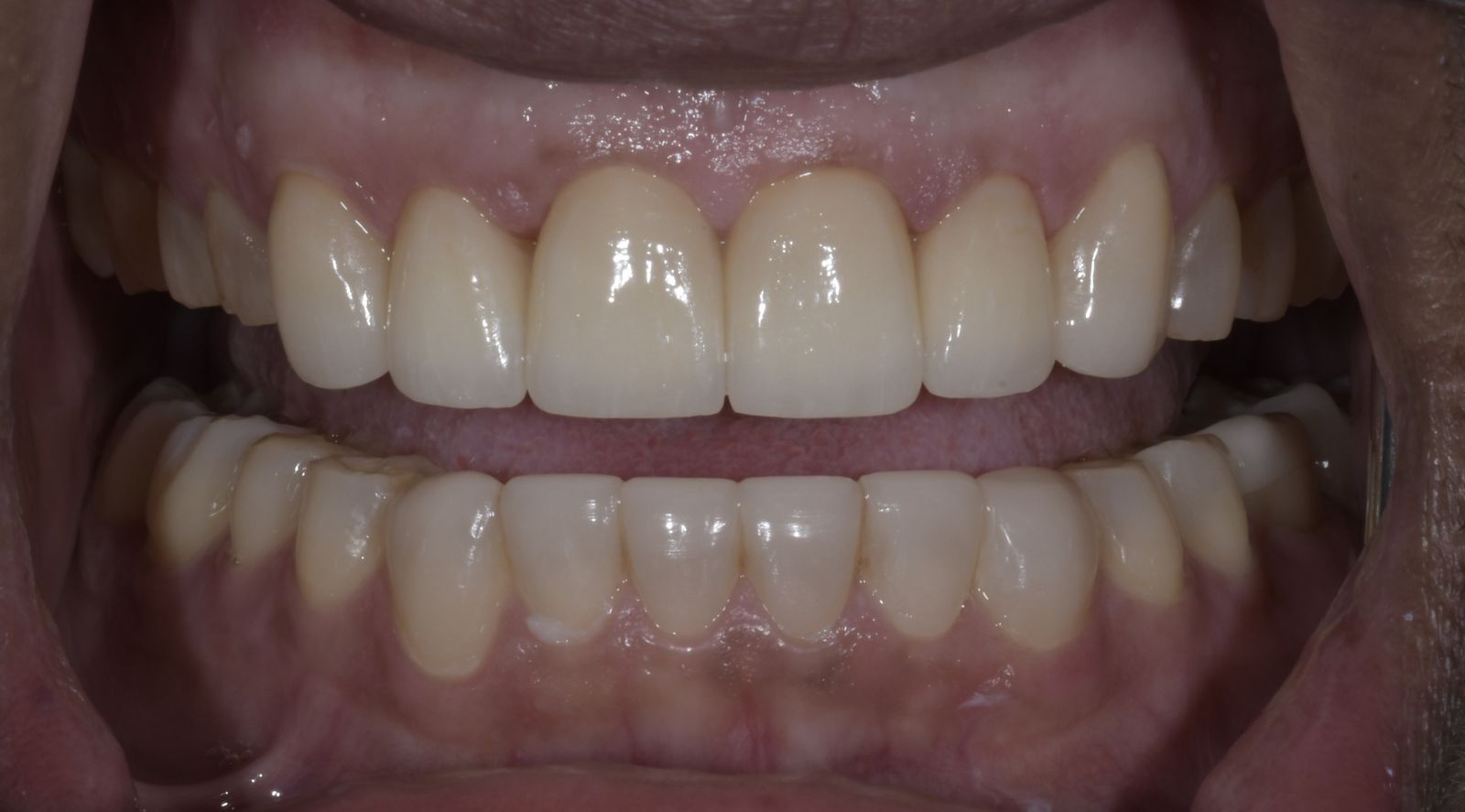
The final result: porcelain veneers on his upper teeth and composite bonding on his lower teeth.
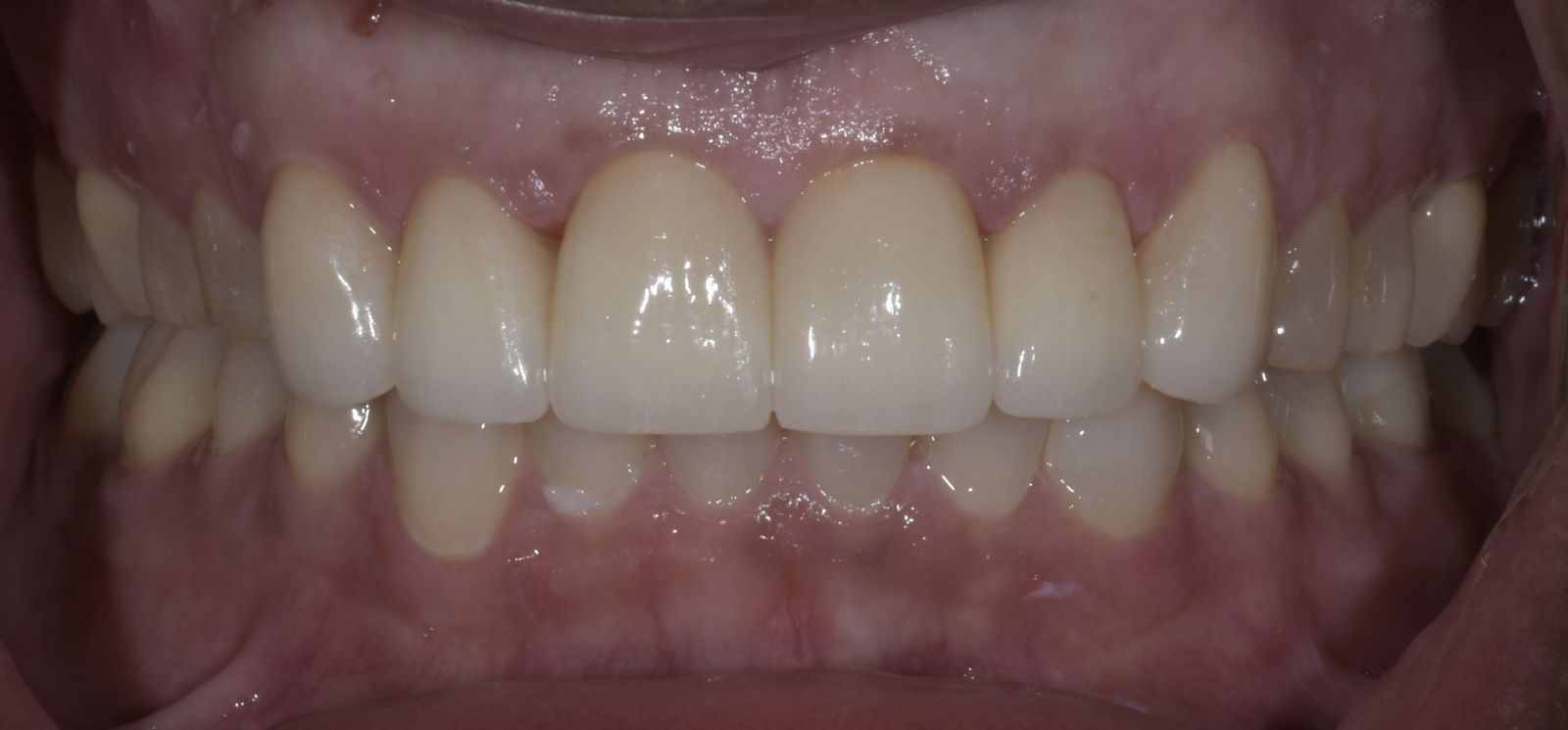
The patient’s corrected bite after treatment.
Planning for Cosmetic Results that Last
This case is a good example of how a smile makeover often combines more than one type of treatment. The visible change came from veneers and bonding, but the orthodontic work behind it is what protects the result.
If you're exploring your options, our guide to choosing a cosmetic dentist in Calgary walks through what to consider. You can see more cases in our smile gallery.
Have you noticed wear or chipping on your front teeth? Request an appointment with Dr. Jennifer Graas to find out what's causing the wear and discuss which cosmetic dentistry treatment may be best for your situation.